
Best British boarding schools for international students: 2026 guide
.jpg)
British boarding schools are residential schools with their own curriculum, integrated residential life, and centuries of tradition in preparing students for the world's most competitive universities. This guide covers the curriculum, selection criteria, profiles of Be Easy's partner schools in the UK, and the application process, from entrance exams to the British visa.
What is a British boarding school?
A British boarding school is a secondary boarding school where students live, study, and participate in academic and sports life on the same campus. The residential model is not a supplement; it is the central structure of the education.
The curriculum follows the Cambridge standard, with two sequential stages:
- IGCSE (ages 14 to 16): the International General Certificate of Secondary Education is the world's most popular international qualification for this age group, according to Cambridge International. It requires at least 5 or 6 subjects, including English, mathematics, and sciences, with room for choices in humanities, arts, and STEM.
- A-Levels (ages 16 to 18): a specialization phase in 3 or 4 subjects, with depth equivalent to the first year of university. A-Levels are what are used for UCAS applications.
The IGCSE was designed for students whose native language is not English, making it the natural path for international young people.
How does the British curriculum prepare students for Oxbridge and the Russell Group?
A-Levels are the main admission criterion for British universities. The early specialization of this format favors candidates with deep mastery in a specific field, in contrast to generalist models like the IB or the American high school diploma.
Applications are made through UCAS, the UK's centralized platform. For 2026, the system adopted a new personal statement format with three thematic sections: motivation, qualifications, and extracurricular experiences.
Two critical deadlines, according to UCAS itself:
- October 15: applications for Oxford, Cambridge, and medicine and dentistry courses
- January 29: general deadline for other courses
Medicine courses may require the UCAT (which replaced the BMAT, discontinued in 2024), while the MAT remains compulsory for mathematics at Oxford and the LNAT for law at several universities.
The Russell Group comprises 24 research-intensive British universities, including Oxford, Cambridge, Imperial, and UCL, with most ranking in the top 100 of the QS World University Rankings 2026. The UCAS tariff system converts A-Level grades into credits that universities use to filter applicants.
What are the criteria for choosing the right boarding school?
The choice depends on at least six objective variables:
The difference between full and weekly boarding directly impacts a student's adaptation. In full boarding, the school becomes the primary living environment. A boarding school's routine includes sports, cultural, and tutoring activities integrated into the academic calendar, not just classes.
Which British boarding schools are part of the Be Easy curation?
Be Easy works with 11 boarding schools in the UK, all with dedicated articles on the blog. Each partner has its own profile, with characteristics that align with different family goals.
Reddam House Berkshire
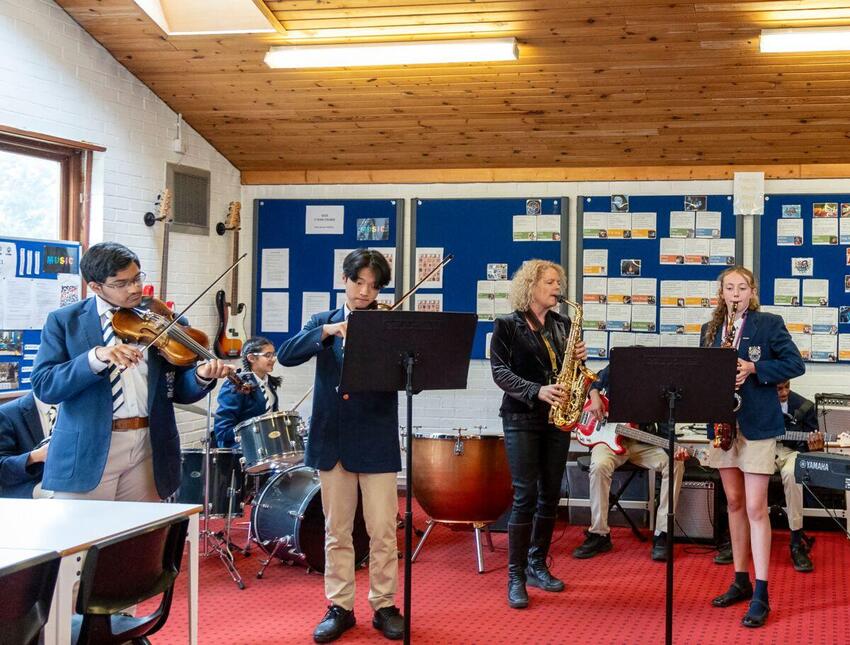
Reddam House Berkshire Reddam House Berkshire operates with over 50 extracurricular clubs and programs such as LAMDA (London Academy of Music and Dramatic Art) and Model United Nations, offering dedicated mentorship and consistent GCSE and A-Level results for Oxford, Cambridge, and the Russell Group.
Bosworth Independent School
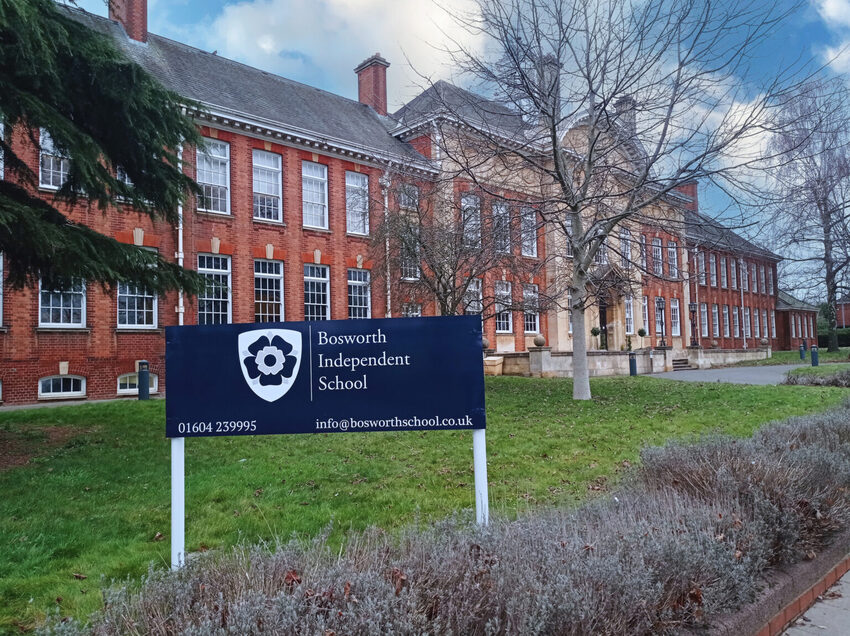
Bosworth Independent Bosworth Independent, in Northampton, operates in a renovated historic 1915 building with 46,500 sq ft of modern facilities. It offers multiple entry points and flexible programs designed to welcome international students for IGCSE or directly into A-Levels.
Cranleigh School
.jpg)
Cranleigh School occupies 240 acres in an Area of Outstanding Natural Beauty in Surrey. Half of its 695 students achieve 8 or more grades at 9-7 in their GCSEs, and 515 of them are full boarders on campus.
Mill Hill School

Mill Hill School offers full boarding on 120 acres, 30 minutes from London, with students remaining on campus throughout the week, weekends, and holidays, plus a guardian education system and 24-hour support from housemasters.
The Worthgate School
.jpg)
The Worthgate School, in Canterbury, Kent, boasts a 92% acceptance rate into Russell Group universities and 77% of A-Level grades are A*-B. Its local IB program has an average score of 33.2, compared to the global average of 30.32, in a multicultural environment with over 50 nationalities.
Bournemouth Collegiate School
.jpg)
Bournemouth Collegiate, located 5 minutes from the beach, operates a Football Academy, Swimming Academy, and Sports Academy which have produced Olympic and professional athletes. Small class sizes of around 10 students and a Pre A-Level program offer structured language support.
Aldenham School
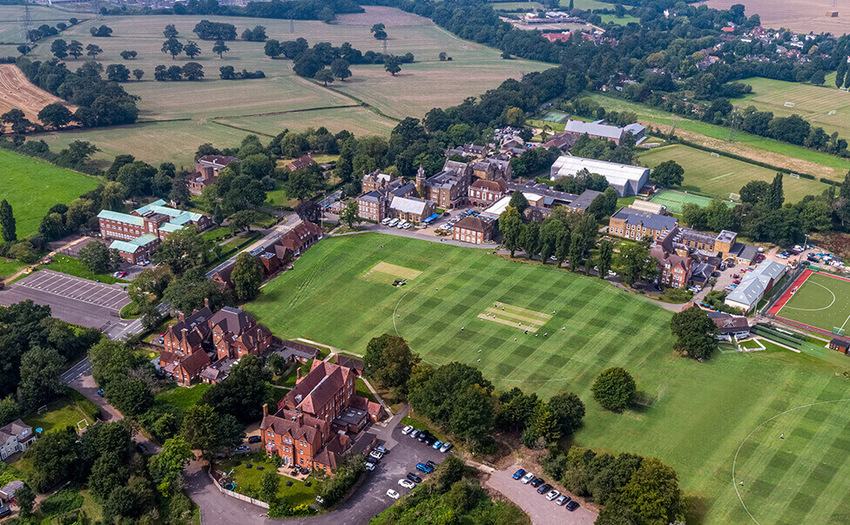
Aldenham School, founded in 1597 and 35 minutes from Heathrow, is set on 110 acres in Hertfordshire and features a dedicated Sixth Form center with 160 students. The school's sporting tradition has produced Premier League players and national team athletes.
Bucksmore Education
.jpg)
Bucksmore Education operates in three locations (Oxford, London, and Brighton), offering individualized matching by age, English level, and objective. It provides Intensive English, Advanced Leadership, University Preparation, and vocational courses for various student profiles.
Monkton Combe School
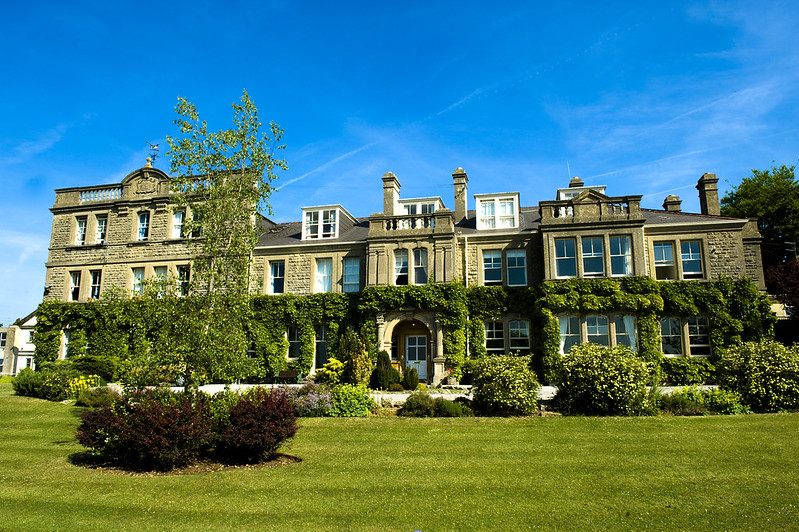
Monkton Combe School, in Bath (a UNESCO World Heritage city), has 215 out of 400 students as boarders. The school combines centuries of tradition, a strong Christian identity, and a high proportion of boarders, which creates a cohesive community on campus.
Guildhouse School
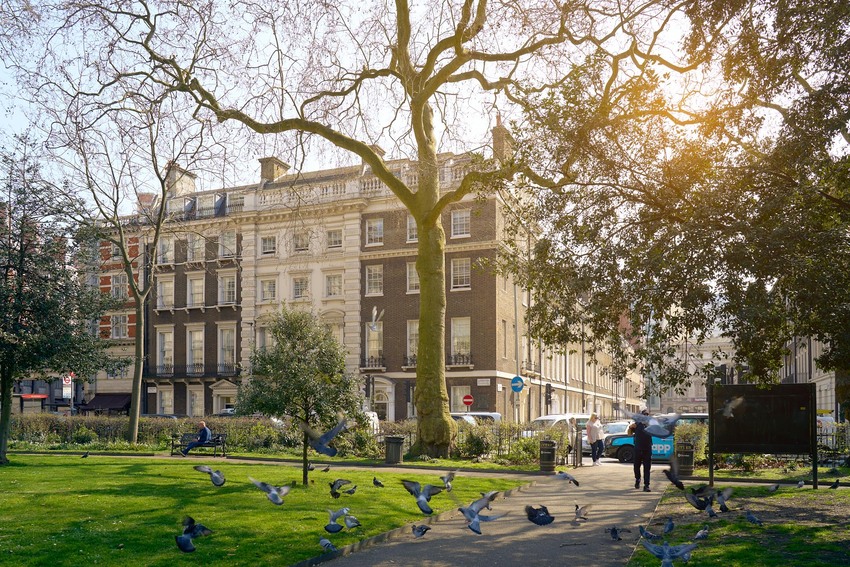
Guildhouse School, in Bloomsbury, London, houses Europe's first Bloomberg Lab in a secondary school. It offers Bloomberg Market Concepts (BMC) certification to students and an annual Business Incubator Challenge judged by entrepreneurs and investors.
Queens College

Queens College, in Devon, achieves a 98% A-Level pass rate, with almost all students securing their first-choice university. It operates its own medical center on campus and a 570-seat theater for student performances.
To understand the differences between boarding and traditional high school formats, read the guide on boarding school versus high school. For an overview of high school curation abroad, the Be Easy hub page compiles profiles, requirements, and application calendars.
How does the application process work?
The admission process for international students at a British boarding school involves four main steps:
- Admission test: UKiset is accepted by over 200 British boarding schools and assesses English, reasoning, and academic potential. The ISEB Common Pre-Test evaluates English, mathematics, and reasoning for entry at ages 11 and 13.
- Interview: individual or group, usually conducted online for international applicants.
- Documentation: translated school transcripts, a statement of purpose, and teacher references.
- Visa: students aged 4 to 17 require a Child Student visa, which replaced the Tier 4 (Child), according to gov.uk. The visa allows study at an independent British school and can be applied for up to 6 months before the course starts.
Frequently asked questions about British boarding schools
Is the IGCSE different from the standard GCSE?
Yes. The GCSE is the standard curriculum for British state schools, available only in the UK. The IGCSE is the international version, available worldwide and designed for students whose mother tongue is not English. Independent boarding schools often adopt the IGCSE for this very reason.
Do international students need advanced English to gain admission?
Not necessarily at entry, but they need to progress during the course. Most boarding schools offer academic English support in the first semesters, and UKiset assesses the current level to place the student in the appropriate class.
What is the difference between full boarding and weekly boarding?
In full boarding, the student stays at school throughout the week, including weekends, with a structured program. In weekly boarding, they return to their family or a local residence on weekends. For international students, full boarding is the most common option.
Is the BMAT still required for medicine applications in the UK?
No. The BMAT was discontinued in 2024. Universities that required the BMAT, including Oxford and Cambridge for medicine, have switched to the UCAT starting from the 2024 admissions cycle.
How far in advance should I start the application process?
Ideally, you should start 12 to 18 months before the entry date. Some schools have waiting lists and application deadlines that close as early as October of the year prior to entry.
Be Easy: Boutique study abroad consultancy
Be Easy supports families who want to build a solid international path for their children. If the destination is a British boarding school, we offer a comprehensive curation : partner school mapping, profile alignment, documentation support, and assistance until arrival. To understand the available options and speak with a dedicated senior consultant, get in touch with us.

