
How to reach Formula 1: the path from junior categories to the grid
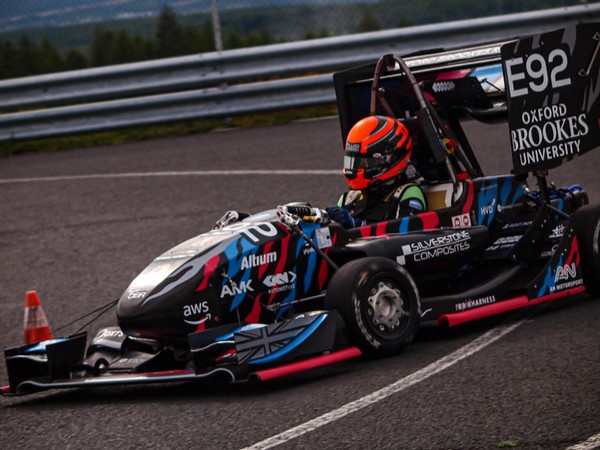
Formula 1 has 20 spots. To secure one, a driver typically undergoes a decade of structured training, starting in karting before the age of 10 and progressing through increasingly faster and more technically demanding categories. In 2014, the FIA, the governing body of global motorsport, established the Global Pathway, an official progression of categories from karting to Formula 4, then Formula 3, Formula 2, and for a select few, the premier class. For families with children already showing talent in karting, understanding how this system works is the starting point for making training decisions that genuinely impact their career path.
What is the FIA Global Pathway and how does it organize the path to F1?
The FIA Global Pathway is a development program created in 2014 that organizes motorsport categories into a progressive sequence, from competitive karting all the way to Formula 1. Its goal is to standardize driver training and ensure that those who reach F1 have progressed through stages with increasing levels of speed, technical responsibility, and international competition.
The sequence works as follows:
- Karting: the technical foundation for every professional driver. International categories like the FIA Karting Academy Trophy and Champions of the Future bring together talent from over 50 countries in events held in Spain, Italy, and the Middle East.
- Formula 4: the first FIA-homologated single-seater car, featuring engines of approximately 160 horsepower. Drivers aged 15 and older can compete and begin accumulating Super Licence Points, the points system that qualifies them for higher categories.
- Formula Regional: an intermediate category created in 2018 to smooth the transition between F4 and F3. More powerful cars, international calendar.
- Formula 3: contested as a support category during F1 weekends, which directly exposes young drivers to the environment of the main grid's teams and sporting directors.
- Formula 2: the antechamber to F1. The F2 champion automatically accumulates 40 Super Licence Points, enough to qualify for the license required to race in Formula 1.
Each step demands specific technical skills. Few drivers climb all of them without interruption, and progression depends as much on on-track performance as it does on support from a team academy.
From Kart to Cockpit: How Does a Driver's Journey Begin?
Karting is the universal prerequisite. There isn't a single driver on the current F1 grid who hasn't spent years on a kart track before stepping into a single-seater.
Most drivers start between 8 and 10 years old, in regional and national categories. The progression follows well-defined stages:
- 8 to 12 years old: developing the fundamentals of control, trajectory, and braking. National competitions and first regional races.
- 11 to 14 years old: entry into more competitive categories, such as the OK-N Junior of Champions of the Future. This international series, directly supported by the F1 Academy, is monitored by scouts from teams across the entire European calendar.
- 14 to 17 years old: competing at the OK-N Senior level, with rounds on circuits like Valencia, Franciacorta, and Sarno. It is at this stage that the academies of major racing teams begin to pay close attention.
- 15 years and older: access to Formula 4, the first formula car of their career.
The critical window is between 13 and 16 years old. Drivers who have not yet reached international competitive level in this age range tend to enter F4 later, which reduces the time available to accumulate Super Licence Points before needing to make definitive career decisions.
Access to international European karting series is the type of path that the Be Easy motorsport exchange program supports: from mapping out the stages to providing logistical and bureaucratic support at the destination, ensuring the driver arrives in Europe under the right conditions to seize every opportunity.
F4, F3, and F2: what changes at each step
Formula categories have differences that go far beyond car power. Each step requires additional technical skills and brings the driver into contact with an operational environment increasingly closer to F1.
The difference between F4 and F2 isn't just power. What decisively changes is the level of technical interaction with the team. In F4, the driver learns to use telemetry data. In F2, they arrive at a qualifying session expecting a full debrief with the data engineer, strategist, and engineering director. Drivers who haven't developed technical communication skills along the way arrive in F2 technically fast, but operationally behind compared to those who trained in this culture since F4.
The FIA Formula 3 Championship is contested as a support category in Monaco, Silverstone, Monza, and other circuits on the F1 calendar. A 17-year-old F3 driver is already in the paddock of the premier category, close to the teams, engineers, and sporting directors who decide on the grid for the following season. This visibility is a developmental factor that no simulator session can replicate.
For families who have already identified their child as a track talent and want to start structuring this journey with specialized guidance, the Be Easy sports exchange program covers everything from mapping out the right academies to full support upon arrival at the destination.
How do F1 team academies operate?
The development academies of major F1 teams are the most direct path to the premier category, but they are rarely the entry point. Drivers join these structures after consistent results in international karting or their first seasons in F4.
- The Ferrari Driver Academy is one of the most selective programs in the industry. Charles Leclerc was identified in high-level karting categories, integrated into the program before turning 18, and reached F1 with Ferrari itself at 21. The academy offers access to main team simulators, technical support from real engineers, and, in some cases, partial funding for championships.
- The Red Bull Junior Team operates with a global network of scouts who monitor the main karting and F4 championships in search of drivers between 13 and 16 years old. According to historical program data, almost half of the 2025 F1 grid passed through Red Bull at some point, including Max Verstappen, Sebastian Vettel, Carlos Sainz, and Pierre Gasly.
- The Mercedes Junior Programme, structured more systematically from 2016, has already developed drivers who reached the main F1 grid. George Russell and Esteban Ocon received direct support from the program before signing contracts with top teams.
What all these programs have in common is that they monitor European junior championships. A driver who has never competed in Europe has almost zero visibility to the scouts of these organizations. Ferrari does not send representatives to local championships outside the European continent. Red Bull operates in the same way: intense monitoring in recognized European series, with occasional visits to external competitions only when a specific talent is on their radar.
Why Europe is the hub for high-level driver development
The answer lies in the density of competitions and the technical culture accumulated over decades. Europe hosts over 25 active Formula 4 championships, with regular calendars in Italy, the United Kingdom, France, Spain, and Germany.
- Italy has the Franciacorta circuit in Lombardy, which hosts rounds of Champions of the Future, and the Sarno circuit near Naples, home to the FIA Karting Academy Trophy. Motor Valley, in Emilia-Romagna, has the highest concentration of automotive engineering companies in the world, creating a technical environment that directly influences the quality of the region's training programs.
- The United Kingdom has the British F4 Championship, one of the most competitive in the world, with rounds at Silverstone and Brands Hatch. The British karting program in partnership with Motorsport UK, launched in 2026, features four rounds in the country with professional-level technical infrastructure.
- France has the Circuit Paul Ricard in Le Castellet, with a historical training tradition that includes intensive F4 training camps with track sessions, simulator work, physical tests, and mental coaching. Spain hosts rounds of Champions of the Future in Valencia, with a favorable climate for year-round training.
Beyond the circuits, there's a decisive technical factor: European teams use professional-level telemetry from the most basic categories. A young driver training in this environment learns to read and discuss acceleration, braking, and trajectory data with engineers. This skill is required from F3 onwards and makes an increasing difference in F2.
The Be Easy motorsport exchange program was structured based on this reality: combining access to European circuits and academies with the comprehensive planning, logistics, and support a family needs to make this decision with confidence.
The Super Licence: What Opens the Door to F1
The FIA Super Licence is the mandatory document required to compete in Formula 1. To obtain it, a driver must accumulate at least 40 points over the three preceding seasons in FIA-recognized categories, in addition to being at least 18 years old.
Points are awarded based on final standings in each championship:
- The Formula 2 champion receives 40 points, enough on their own to secure the licence.
- The Formula 3 champion receives 30 points, meaning they need additional results in other categories to reach 40.
- The champion of a selected Formula 4 series receives 12 points per season.
The practical window between competitive karting and obtaining a Super Licence is typically around 7 to 10 years, depending on performance each season. Drivers who reach F2 at 19 or 20 and win the championship are guaranteed the licence. Those who arrive later need to accumulate points over several seasons in different categories.
This points structure means that career path planning directly impacts the feasibility of the dream. A family that starts building this journey with their child at 13, prioritizing European competitive exposure, has a realistic horizon for visibility to team academies between the ages of 15 and 17.
Frequently Asked Questions about Reaching Formula 1
At what age can one compete in Formula 1?
The FIA requires a minimum age of 18 to compete in F1. In addition to age, a driver must have accumulated at least 40 Super Licence Points in FIA-recognized championships during the three seasons prior to applying for the licence.
Is karting mandatory on the path to F1?
It is not formally required by the regulations, but in practice, every driver on the current F1 grid has come through karting. The skills in control, racing lines, and reaction developed in karting form the technical foundation that formula categories progressively build upon.
How does a young driver get into a racing academy like the Ferrari Driver Academy or the Red Bull Junior Team?
These academies identify talent directly from karting and Formula 4 championships. Drivers with consistent results in series like Champions of the Future and in Europe's national F4 championships get on the scouts' radar. There is no open application process: the path involves competing on circuits where scouts are present.
How many seasons does it take to complete the full FIA Global Pathway?
The journey from competitive karting to Formula 2 takes between 8 and 12 years for most drivers. Talents with accelerated progression complete the cycle in 7 to 8 years. The speed depends on performance in each category and, in many cases, on the support of a racing academy that covers part of the championship costs.
Why is competing in Europe necessary to reach F1?
European championships are the ones that accumulate Super Licence Points relevant to F1 and are the only ones systematically monitored by scouts from major team academies. Furthermore, the density of competitions, the technical level of the teams, and exposure to the professional paddock environment create development conditions that do not exist in other contexts.
Be Easy: Boutique exchange consultancy
Be Easy supports families who want to build a real career path in international motorsport for their children. If your child already competes in karting and is ready to take the next step in Europe, we have the expertise to identify the ideal program, circuit, and timing for this decision. To discuss the available options and speak with a dedicated senior consultant, please contact us.

