
Motorsport engineering summer camp: places open for 2027
The motorsport engineering summer camp at Dallara Academy, in Parma, has places open for young people aged 15 to 18 in 2027. Before the trip, our consultant helps your family choose between the two groups and prepare the student for two residential weeks of classes, laboratories and shared life in English.
When does the motorsport summer camp take place in 2027?
The two groups offer the same engineering experience, with 60 hours of classes and laboratories. The choice starts with the period that fits your child's school holidays:
- First group: arrival on 27 June and departure on 10 July 2027.
- Second group: arrival on 11 July and departure on 24 July 2027.
- Length and format: two residential weeks, with accommodation, meals and support for the group.
In the motorsport exchange, arrival and departure dates are part of the organisation of the experience. Welcome is set for the opening Sunday, from 17:30 to 19:30. We help you link that time to the flight and the journey to the accommodation.
Preparation before the trip covers English, life in a shared room and questions about the days away from home.
What interest can take your child to Dallara Academy?
The programme is for young people aged 15 to 18 who are interested in engineering, technology and motorsport. Curiosity that begins with racing can find a use: drawing a part, learning a manufacturing process and following the assembly of a model.
The experience accepts students with no previous knowledge of engineering, CAD or race driving. The activities introduce foundations and tools across the two weeks, so a student can explore a field before the university decision.
In the conversation with the family, we identify what most sparks the wish to take part:
- Building: an interest in turning drawings and ideas into objects.
- How things work: curiosity about movement, materials and how cars perform.
- Creating in a team: readiness to share proposals and develop a piece of work with other students.
Motorsport engineering for teenagers makes room for that discovery. Your child may arrive interested in cars and leave with more specific questions about aerodynamics, digital drawing or materials.
What does the student build during the two weeks?
The project ends with a Formula 1 car model at 1:20 scale, with a team presentation and a final race. Up to that point, the student goes through foundations, drawing, manufacture and assembly.
The sequence gives the content a purpose: what appears in class will be used to understand and develop the model. The syllabus includes:
- Foundations and drawing: engineering, aerodynamics, vehicle dynamics and digital representation in CAD.
- Manufacture: 3D modelling and printing, CNC processes and carbon-fibre moulding.
- Assembly and presentation: building the assembly and communicating the work developed by the team.
- Simulation: practice on a professional simulator to explore how the vehicle behaves.
By taking part in the scale project, the young person meets different tasks within engineering. He may take an interest in representation on the computer, in transforming the material or in how the car behaves. The vocational opportunity is to try these activities on the same path.
How are classes, laboratories and shared life spread through the day?
The reference day puts classes in the morning and laboratories in the afternoon. Meals, outings and evening activities complete the residential routine:
- Morning: breakfast from 8:00 to 9:00 and classes from 10:00 to 12:30.
- Afternoon: lunch from 12:30 to 13:30, followed by laboratory work from 13:30 to 16:30.
- Late afternoon: excursion time from 17:00 to 19:00, according to the programme.
- Evening: dinner from 19:00 to 20:00, activities until 22:30 and silence at 23:00.
Excursion days have their own programme. The first group sets aside 3 and 4 July for these outings; in the second, they fall on 17 and 18 July. The calendar alternates work on the project with the experience of getting to know the region.
For someone travelling without their parents for the first time, picturing that day helps the change feel closer. Your child can imagine where he will be during classes, when he will eat and how he will live with the group. Our consultant talks with the family about this organisation before departure.
Where does the student stay?
The planned stay is at the Daytona Hotel & Residence, in a shared room with a private bathroom. The hotel has common areas for study and time together, and the programme has a team present 24 hours a day.
Residential life is also part of the choice. The student shares spaces with other students and starts to use English in situations that continue after the laboratory.
The family can bring questions about how the rooms are organised and about the student's particular needs. We help clarify the accommodation conditions so the decision also covers comfort and settling in outside class.
What is included, and what belongs in the organisation of the trip?
The residential proposal brings together the academic side and the stay. The items set out in the 2027 material are:
- Education: 60 hours of classes and laboratories, project materials and CAD software.
- Project: building the Formula 1 model at 1:20 scale and a certificate of completion.
- Stay: accommodation, three meals a day and support from the team.
- Programme: excursions, cultural visits and a daily transfer to classes.
- Insurance included: civil liability and accidents.
Transport from the airport is a service separate from the daily transfer. Travel guidance sets each leg and the other items apart:
- Arrival in Italy: the flight and the airport transfer are organised separately.
- Additional services: extra nights and other needs depend on the route chosen.
- Additional insurance: there is a multi-risk option, with a type that includes cancellation, according to the policy conditions.
- Personal use: individual expenses sit outside what the programme includes.
This separation lets the family see the full experience before defining the trip. Our consultant explains which services are already in the proposal and which will be needed for your child's route.
Which visits bring the young person closer to the industry?
The programme takes the group to places linked to the subjects studied in the laboratory. The planned visits include Dallara, Dallara Compositi and the Ferrari Museum:
- Dallara: contact with the industrial setting of the competition-car maker.
- Dallara Compositi: a closer look at composite materials, also present in the academic content.
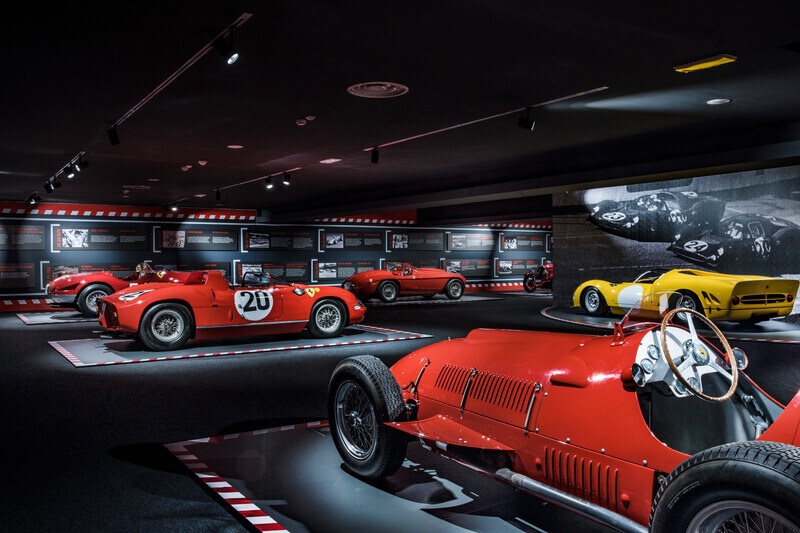
- Ferrari Museum: a visit with a laboratory and a pit stop experience set out in the programme.
The material also presents Ferrari Red Campus, a visit to a Parmigiano Reggiano factory and a walk around Parma. The fortnight combines an interest in cars with contact with the Italian region where the group will be staying.
After studying drawing and manufacture, seeing these places widens the student's frame of reference. The young person can link the model developed in class to other cars, materials and processes met during the visits.
How does English come into preparation for the trip?
Classes and laboratories are taught in English. The language also runs through conversations with the team, the final presentation and time with other students. Preparation is tied to these situations:
- Understanding: follow an instruction and identify the part of the activity under way.
- Taking part: ask questions, ask for clarification and share an idea with the group.
- Vocabulary: recognise words linked to shape, part, material and movement.
A student may know racing terms and still need to practise explaining a project. We talk about current English to help the family prepare the young person to take part in the activities and gain confidence in exchanges with the group.
How do you choose between engineering, sim racing and automotive design?
The three programmes sit close because of an interest in cars, but they propose different work. The choice finds a direction when your child recognises the activity he would most like to try:
- Build in Parma: draw, manufacture and assemble a model in two weeks of summer camp.
- Investigate performance in Indianapolis: use simulators, telemetry and strategy in the sim racing programme, held during spring break.
- Create in Milan: develop the drawing and modelling of the vehicle's shape in the automotive design summer camp.
Exploration can be a first step for someone thinking about working in motorsport. In our vocational curation, we link that interest to the activities and the calendar, helping the family choose an experience suited to the student's moment.
Frequently asked questions about the motorsport summer camp
Does the student need experience with CAD or race driving?
No. The programme introduces engineering foundations and project tools to young people aged 15 to 18, without requiring previous experience in these activities.
Which airports serve arrival for the programme?
Bologna, Milan Linate and Milan Malpensa are the options named in the material. The airport transfer is requested separately.
Is there a daytime format for someone travelling with the family?
No. The programme announced for 2027 has a two-week residential format.
Is the included insurance the same as the additional multi-risk cover?
No. The inclusion covers civil liability and accidents; multi-risk cover is a separate option, according to the policy conditions.
Does the certificate correspond to an engineering degree?
No. The certificate records completion of the two-week summer camp.
You already know the experience in Parma. Which group fits your child's holidays?
Bring the school calendar and tell us what sparks his curiosity about cars. Our consultant helps your family choose the group and prepare the 2027 experience.
Be Easy: boutique study abroad consultancy
Be Easy supports your family in choosing the programme and in preparing to study and share daily life in Italy. Our curation, with a dedicated senior consultant, connects the young person's interests to the experience: contact us to plan the 2027 summer camp.

