
Karting summer camp in England: how the British programme of up to 6 weeks for young people works
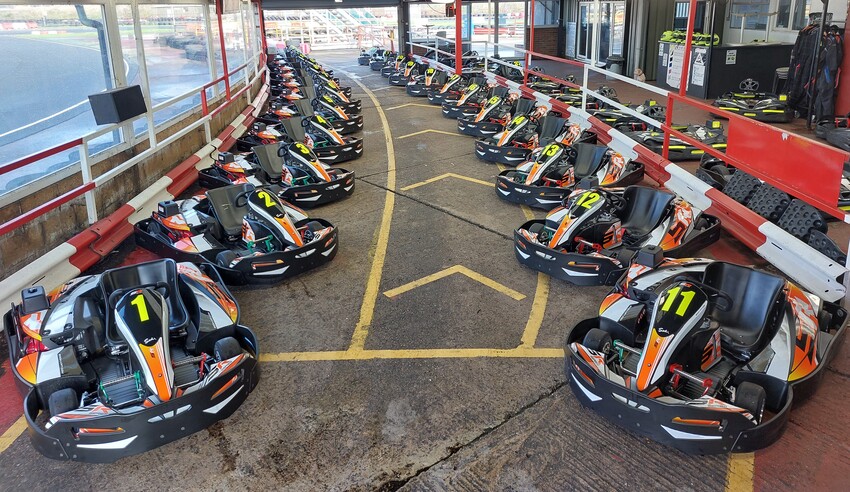
Anyone researching summer options for a child aged 8 to 12 or 13 to 17 with a genuine interest in motorsport knows that the menu of programmes is, for the most part, disappointing: it is either driving with no educational structure, or a generic English course that piles on sports activities without any technical depth. What makes this British programme in Suffolk different is precisely its refusal to do that: 20 hours of classroom English per week + 10 hours of karting on a real track per week, under professional coaches, with an internal championship system that produces points, rankings and trophies. It is not a sightseeing trip. It is structure.
The programme runs from 5 July to 16 August 2026 on a residential basis, at a school set on 75 acres on the Suffolk Heritage Coast, a 5 minute walk from Southwold. The school holds a national teaching award from 2024, is accredited by the BAC (British Accreditation Council) and is a signatory of the UNEP Caring for Climate commitment. For parents who put safety and credentials at the top of the list, these three points matter before anything else.
How is the programme structured week by week?
A typical week combines three tracks in parallel: English lessons in the morning, karting on the partner track in Suffolk during the afternoon, and cultural or recreational activities during free periods.
The English lessons add up to 20 hours per week with classes of no more than 16 students. There are two distinct age groups: 8 to 12 years and 13 to 17 years, each with its own supervision and a curriculum suited to the age range. English does not work as an isolated subject; the immersion begins in the residence, continues on the excursions and rounds out the daily life on campus.
Karting takes up 10 hours per week on a partner track in Suffolk with professional coaches. The system used is an internal classification league, which splits participants into classes, awards points for performance in each session and works out weekly rankings. Trophies for the top 3 are presented every fortnight.
What does the internal league system mean in practice?
The logic is simple and works much like the divisions of competitive karting:
- Each driver is given a class based on the skill level assessed at the start of the programme
- The weekly sessions generate accumulated points
- The ranking is updated at the end of each week and displayed for all participants
- The fortnightly trophy ceremony replicates the ritual of official races: podium, public recognition, photos
For a young person who is exploring whether motorsport is the right path, taking part in a real competition with rules, time pressure and rivals alongside them is different from any simulation.
Which excursions and activities are included?
Three full day excursions per week cover Cambridge, Oxford, London, Bristol, Lyme Regis, Norwich, Norfolk, Colchester, Lavenham, Southwold, Lowestoft and Aldeburgh. The location in Suffolk places the programme in a geographically favourable spot: 1h45 transfer from Stansted, 3h30 from Heathrow.
Beyond the excursions, the campus calendar includes:
- 4 half day activities: Crazy Olympics, Scavenger Hunt, Catch the Flag, Murder Mystery
- 7 organised evenings per week: quiz night, dance, movie night, talent show, karaoke, board game night and variations
How does the English programme fit together with the karting?
The English lessons take place in the morning, when energy and focus are at their highest. Karting is left for the afternoon, working as a natural reward. There is an implicit discipline in the calendar: those who want the track complete the morning.
For families who set English as the primary goal, the sports study abroad in England shows how cultural immersion and contact with international peers accelerate fluency.
Anyone who wants to understand how the karting study abroad for young people fits into a longer journey in motorsport will find that overview on the Race subdomain.
Logistics, accommodation and supervision: what parents need to know
The programme is 100% residential on the 75 acre campus in Suffolk.
Families researching this kind of programme often compare it with the generic format of a 2 week study abroad in England. The central difference of the 6 week programme lies in the technical progression in karting.
For parents who want to understand the broader context of vocational programmes, the vocational study abroad curation for young people brings together the available formats by field, age range and destination.
Frequently asked questions about karting summer camp in England
Does the programme require previous karting experience?No. The internal classification league system splits participants into classes by level assessed at the start of the programme.
How do the two separate age groups work?The 8-12 years and 13-17 years groups have their own supervision, an adjusted calendar and separate English and karting classes.
What credentials does the British operator hold?The programme holds a national teaching award from 2024, BAC accreditation and is a signatory of the UNEP Caring for Climate commitment.
How many weeks does my child need to attend?The programme runs with flexible weekly modules within the period from 5 July to 16 August.
Does the programme include excursions to historic cities?Yes. Three full day excursions per week cover destinations such as Cambridge, Oxford, London and others.
Be Easy: boutique study abroad consultancy
Be Easy supports families who want to give their child a real starting point in motorsport. If your child shows an interest in karting or sees motorsport as a vocational path, we have the right curation to find the format and duration that make sense. To talk and speak with a dedicated senior consultant, get in touch with us.

